
Archives: Spots

Cala Viola de Llevant

Located near the Cap Cavalleria lighthouse, in the North reserve. Posidonia, sandy areas and rocky walls alternate creating refuge for a large amount of marine life. Rich in groupers, barracudas, octopuses, large ravens, nudibranchs and scorpionfish.

— Spot description by SSI

— Photos by Ana Ferreira

Escull del Gobernador

The rocky islet is outside Es Talaier, from the surface you can admire the gigantic impact of the bow of the Malakoff, a cargo ship sunk a few hundred meters offshore. Groupers, moray eels, barracudas, nudibranchs, scorpion fish, octopuses, snappers, amberjacks, rays, torpedoes and triggerfish can be admired especially in the low season.

— Spot description by SSI

— Photos by Eurico Roseiro and Holaislascanarias

Cueva del Inglés

The cavern is approachable from the surface and it drops until 18m depth underwater. As we go, the cavern becomes more narrow. When we look backwards there is an amazing backlight that !Will leave you breathless! Outside the cavern we can mainly find moray-eels, groupers, some nudis and white gorgonian. Inside, a lot of shrimps cover the walls and it’s possible to see some congers.

— Spot description by SSI

— Photos by Pedro Afonso

Punta des Murter

 As soon as we leave the bay, we turn to the right to reach Punta des Murter. It anchors on a platform at 5m to fall to a maximum of 20m. Throughout the dive there is life, tunnels, ceilings and a small cavern with a nice backlight.  On the rocks: octopuses, moray eels and some nudibranchs. Swimming we see groupers, barracudas and the occasional dentex. In the small cavern you can see prawns and cardinalfishes.

— Spot description by SSI

— Photos by Ana Ferreira and Eurico Roseiro

Cueva de Llamp

Five minutes from the harbour of Fornells. It’s a set of caverns that can be adapted to different levels. Depending on the anchor point we will see the caverns from different perspectives. The backlight that the caverns offer is captivating. Outside the caverns, there are a lot of rocks with holes and tunnels. Inside the caverns we can see cardinalfishes, shrimps… Outside, some groupers, moray-eels and salemas can be seen among the rocks.

— Spot description by SSI

— Photos by Ana Ferreira and Pedro Afonso

Quezo Suizo

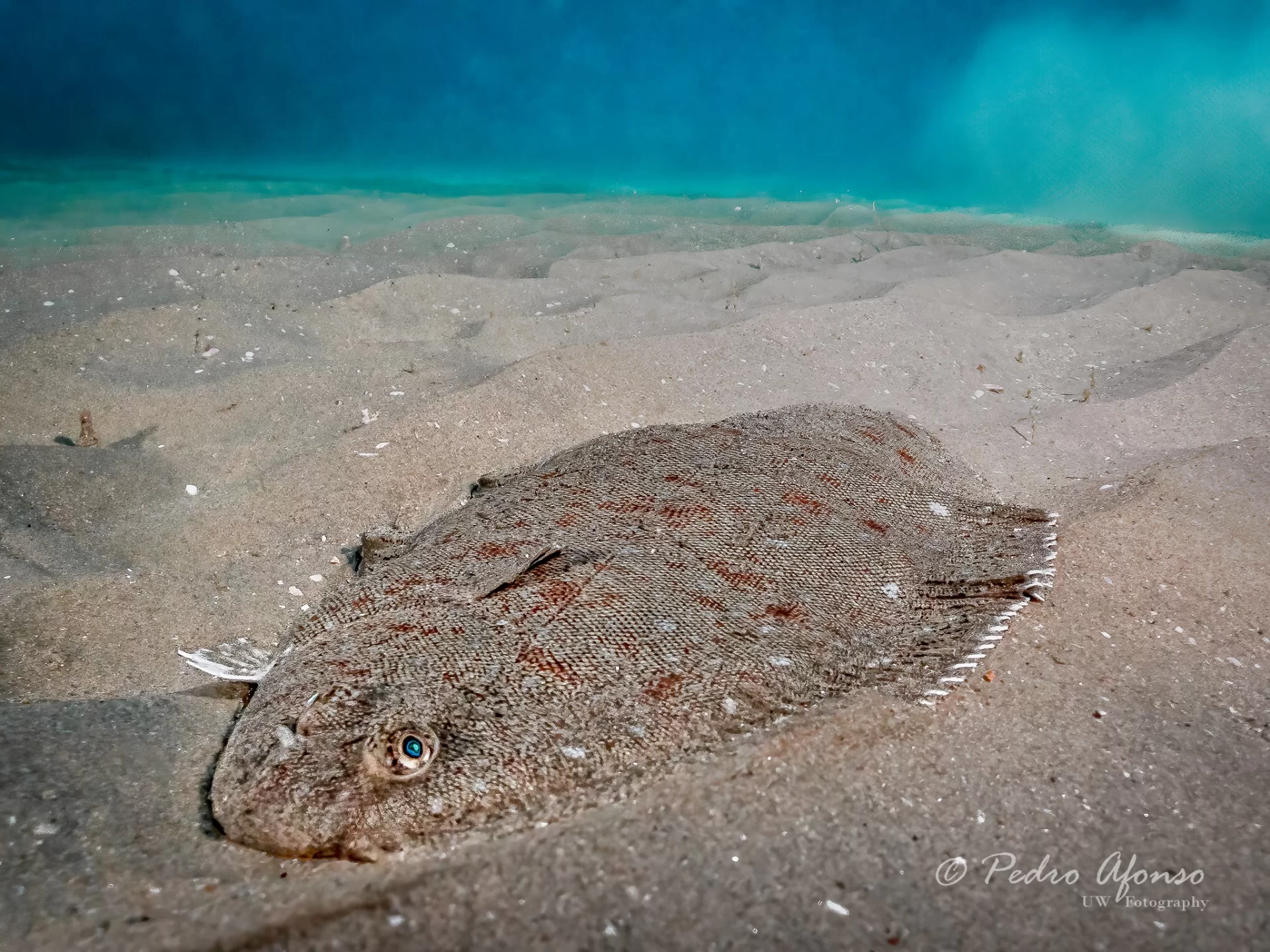
On the north coast of Minorca, in Arenal de Castell, at the bottom of the reef of Cala Morts, you will find a large, submerged rock to explore. The play of light on the rock is very interesting. You can see morays in the cracks, school of barracudas, damselfish, and white seabreams; at the bottom, there are usually common stingrays, wide-eyed flounders, and red starfish.

— Spot description by SSI

— Photos by Ana Ferreira and Pedro Afonso

Illa de Tirant

Leaving the bay of Fornells, on the rightside, we find the islet of Tirant. A place with a variety of possibilities, from a shallow dive for a try scuba, to dives for divers who want to see more life. It is possible to go around the islet to see a diversity of fish. In the cove you can see all kinds of fish: salemas, mullets, groupers, damnselfish, octopus,… Surrounding the islet, it is possible to see larger groupers, nudis, gorgonias.

— Spot description by SSI

— Photos by Ana Ferreira and Pedro Afonso

Bahia de Fornells

This dive sites consists ina sandy and rocky area with Posidonia. In the sandbank it is possible to see some wide-eyed flounder fish, mullets… In the rock and posidonia area there are banks of damselfish and some octopus.

— Spot description by SSI

— Photos by Ana Ferreira

Illa Bledes

One of the furthest dives from the port of Fornells and the closest to the Integral Marine Reserve of the North of Menorca. We anchor on a submarine mountain near the Illa de ses Bledes. We surround this mountain by the walls that drop up to 30m, seeing the variety of holes and life that it shelters. It is possible to see barracudas, groupers, seabreams, dentex, damnselfish as well moray eels, octopuses and nudis.

— Spot description by SSI

— Photos by Eurico Roseiro

Escull de Tortuga

In the famous Caribbean waters of southern Menorca, the site is located between Cala Macarella and Cala Turqueta. It owes its name to the shape of a rock a few meters from the surface that imitates the head of a turtle emerging from its shell. Simple dive, perfect for beginners. Groupers, scorpionfish, octopuses, moray eels. In the low season there is a school of barracudas and it is possible to meet the beautiful Mediterranean Cassiopeia (fried egg jellyfish)

— Spot description by SSI

— Photos by Ana Ferreira
Punta na Gall

The dive starts from 6/7 meters and goes down to the sandy bottom at 17 meters. At the end of the dive we enter an incredible cave on one side and going up in a vertical tunnel we go out on the opposite side. Here you can spot barracudas, rays, groupers, scorpion fish, nudibranchs, moray eels, octopuses and sometimes schools of amberjacks

— Spot description by SSI

— Photos by Ana Ferreira

Cuevas de Macarella

 Just at five meters depth you can spot the Macarella caves with a small air chamber. Perfect for spotting early-season stingrays, torpedos, barracudas. Here you can also spot a school of fishes, especially in the caves.

— Spot description by SSI

— Photos by Ana Ferreira and Eurico Roseiro