Archives: Spots

Bajo de las Gorgonias

It feels like swimming through a living garden suspended in the sea.

At Bajo de las Gorgonias, the dive begins over a gentle underwater mountain, stretching quietly along the coast. Almost immediately, the reef bursts into life—fields of gorgonians sway like underwater trees, especially dense on the southern slope, turning the rock into a moving tapestry of color. Schools of bogas, bream, and salema drift past in soft waves, while triggerfish and moonfish flash through the blue. On the northern face, tiny nudibranchs scatter like jewels across the stone. Look closer and the reef reveals its quieter residents—octopus, cuttlefish, conger eels, and spider crabs tucked into the cracks. It’s a shallow, peaceful dive, but endlessly rich… like nature decided to showcase everything it has at once.

–Photos by Ana Ferreira and Pedro Afonso

Isla de los Conejos

It feels like entering a scattered world where every island hides its own secret.

At Isla de los Conejos, the dive begins between a cluster of rocky islands rising from the sea like stepping stones into another realm. One moment you’re gliding over shallow passages at 10 metres, the next you’re choosing your path through channels that open into deeper blue. Each island—Conejera, Cabrera, Pasiega, Solita, Casilda—feels like a different chapter, each with its own rhythm of life. Fish weave through the rocks, life clings to every surface, and the sea shifts constantly around you. It’s a place made for exploration, where no two routes feel the same. You don’t just dive here—you navigate a small underwater archipelago alive with possibility.

–Photos by Eurico roseiro

Remior reef

It feels like slipping into a quiet underwater meadow where everything moves with the rhythm of the tide.

At Remior Reef, the dive stays shallow and calm, but never empty. Rocky patches blend into soft sandy stretches, guiding you through a gentle, open landscape perfect for discovery. In spring and summer, kelp forests rise from the seabed like swaying green fields, sheltering wrasses, julias, and other small reef life that flicker between the fronds. Drift a little further, and the sand begins to shift—suddenly, a ray appears, gliding effortlessly just above the bottom before disappearing into the blue. It’s an easy, unhurried dive, but full of quiet surprises… the kind that make you slow down and simply watch the ocean breathe.

–Photos by Fishbase and Rolando Oliveira

Piedra de los Sargos

It rises quietly from the blue… a reef that feels both gentle and full of life.

At Piedra de los Sargos, you descend onto a rocky plateau just a few metres below the surface, where sunlight dances across the stone. From there, the reef drops into vertical walls, drawing you down toward deeper water. Along the way, cracks and crevices open up everywhere—perfect hiding places where bream and sea bass hover, watching your every move. Life fills the spaces in between: small fish flicker, invertebrates cling to the rock, and the whole reef feels alive in subtle motion.

As you ascend, the shallow top welcomes you back, calm and bright—an ideal pause, where time slows and the dive gently comes to an end.

–Photos by holaislascanarias

Os Cairos

Just a few minutes from shore… and you’re already inside a hidden maze of life.

At Os Cairos, the dive begins gently, in shallow, clear water where rock and sand blend into a calm, inviting landscape. But keep moving, and the reef starts to open—small galleries and submerged passageways appear, each one buzzing with activity. Schools of fish drift through like moving shadows, while sea bass and bream weave between the rocks. Closer to the bottom, octopus and cuttlefish hide in plain sight, perfectly still until you notice them.

Fed by the nearby estuary, everything here feels alive, abundant, constantly in motion. It’s an easy dive, unhurried… but full of quiet discoveries that reward those who take their time.

–Photos by Ana Ferreira

La Pared

It feels like entering a quiet coastal gallery where every detail is alive if you take the time to look.

At La Pared, the dive begins gently along the rocky edge of Llas beach, where shallow reefs blend into soft sand. Light filters easily through the water, revealing a landscape designed for slow exploration. Between the stones, life hides in plain sight—nudibranchs in vivid patterns, tiny invertebrates clinging to the rock, and small coastal species moving with the rhythm of the tide. There’s no rush here, no depth to chase—just the pleasure of noticing. Every fin movement stirs something new into view, as if the reef is quietly revealing itself, one detail at a time, for those who are willing to slow down and look closer.

–Photos by Ana Ferreira

As Doval de Fuera

It feels like slipping into a maze carved gently by the sea—quiet, shallow, and full of hidden life.

At As Doval de Fuera, the dive unfolds just off Llas beach, where rocky reefs and sandy corridors weave together like natural pathways. Light filters easily through the water, revealing a calm, welcoming world that never feels rushed. You drift between narrow channels and open patches of sand, each turn offering something new to notice. In the cracks of the reef, life hides in abundance—especially in spring and summer, when everything seems more alive. Look closely, and you might spot large lobsters tucked deep within the stone, watching from the shadows. It’s an easy dive, but one that rewards patience… where every corner feels like a small discovery waiting just for you.

–Photos by Ana Ferreira and Pedro Afonso

As Doval

It feels like the ocean quietly steps back… just to let you in.

At As Doval, low tide reveals a calm lagoon tucked between islets and shore, turning the sea into a natural swimming pool. The water is gentle, almost protective, making it the perfect place to take your first breath underwater. As you glide forward, the seabed comes alive—soft algae fields waving with the tide and small creatures moving through the warmth of spring and summer waters. Over sandy patches, you might suddenly notice movement: mosaic stingrays gliding effortlessly just above the bottom, blending in until they reveal themselves. Everything here feels slow and welcoming, like the ocean is introducing itself one quiet layer at a time.

–Photos by Ana Ferreira and Pedro Afonso

El Desfiladero

What looks wild from above becomes pure magic once you descend beneath it.

At El Desfiladero, the reef opens into a labyrinth of rocky corridors and narrow channels, inviting you to wander without ever feeling lost. In spring and summer, towering kelp forests sway with the surge, turning the dive into something almost cinematic—as if you’re drifting through an underwater canyon carved from green light. Every wall is alive with detail: tiny invertebrates cling to the rock, flashes of color appear between the algae, and hidden macro life rewards every slow glance.
The deeper you go, the more the reef reveals itself, shifting between open spaces and sheltered passages. It’s the kind of dive that feels different every time—calm, immersive, and endlessly alive.

–Photos by Adobestock and Pedro Afonso

La Catedral

It doesn’t feel like a dive site—it feels like entering an underwater cathedral built by the ocean itself.

At La Catedral, towering walls plunge into the deep, covered in an explosion of anemones, sponges, and delicate life that transforms the rock into living art. Light filters down from above like stained glass through water, illuminating black coral and swaying gorgonians hidden along the walls. The deeper you drift, the more dramatic the scenery becomes—vast, silent, almost sacred.

Then, out in the blue, a sunfish may appear, moving slowly through the water with impossible grace. Around you, every surface pulses with biodiversity, every crevice holds color and movement. It’s not just beautiful—it’s overwhelming in the best possible way, a place that makes you feel small beneath the immensity of the sea.

–Photos by Eurico Roseiro and Pedro Afonso

El Gabito

It feels like drifting into a living fortress where every wall breathes with movement.

At El Gabito, the reef rises from 30 metres into the blue, unfolding like a vast underwater landscape covered in detail. In spring and summer, kelp forests sway across the bottom, turning the dive into a shifting green labyrinth. Around you, the rock is alive—anemones, sponges, and gorgonians covering every surface, guarded by wrasses and hidden octopus.

As you move along the structure, the energy builds: schools of jacks and mackerel circle in the blue, while bogas and bream gather closer to the reef. It’s a dive that feels constantly in motion, where every corner holds life, and the ocean never stops revealing something new just beyond your view.

–Photos by

Cordero Gonzalez

It feels like descending into a moment frozen in time, where the sea quietly guards a forgotten story.

At Cordero González, a wooden fishing boat from 1961 rests on the seabed, broken yet still full of presence. As you approach, the shape of the wreck slowly emerges—rudder, chimneys, and scattered relics like bottles and machinery, all softened by decades underwater. It’s as if the ocean has carefully preserved the memory of that final voyage since 1975.

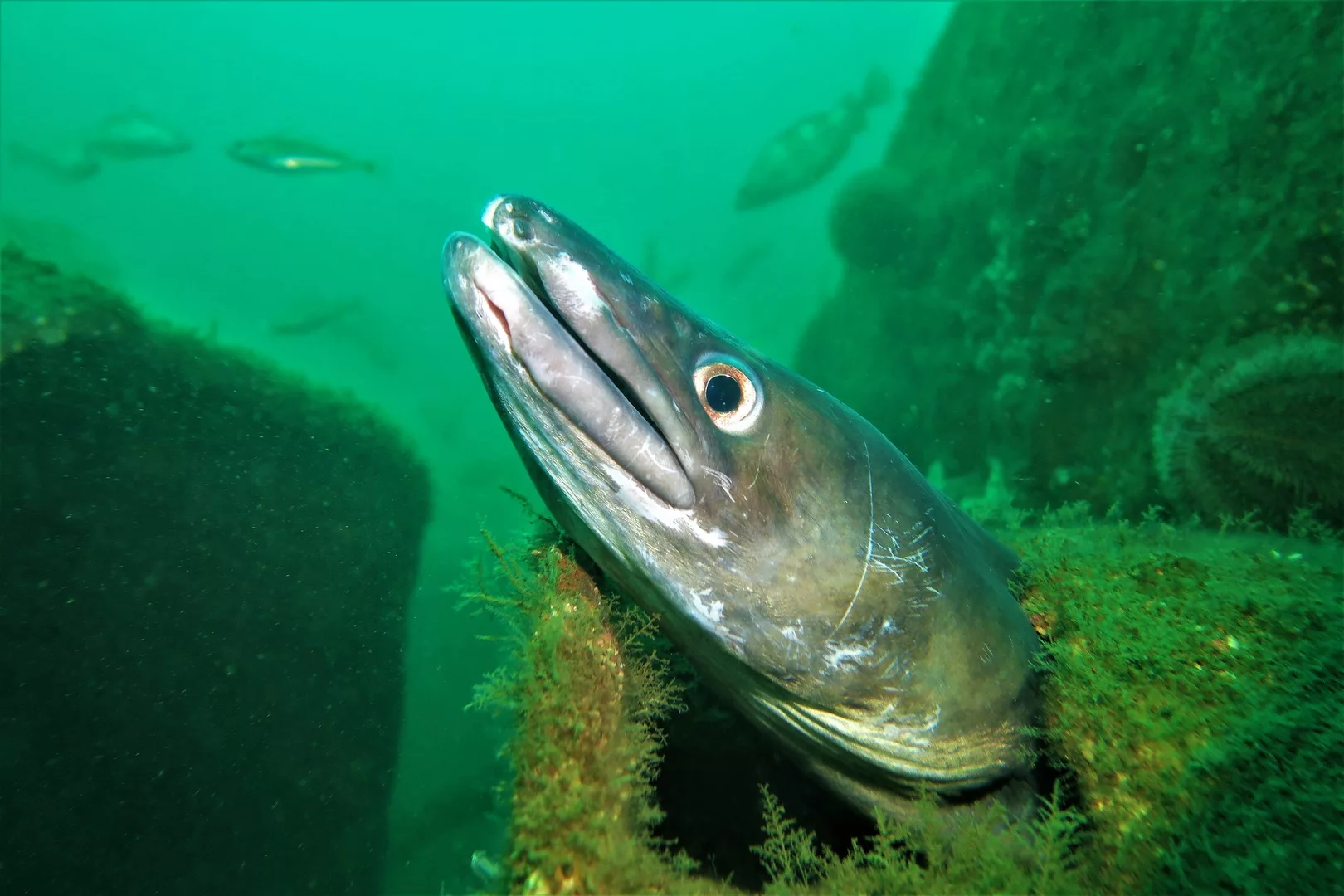
Life has claimed it now. Conger eels weave through the structure, pouts drift in and out of shadows, and wrasses circle the remains with effortless rhythm. The wreck feels both eerie and alive—a meeting point between history and nature, where every detail invites you to imagine what once was.

–Photos by PADI