Archives: Spots

Bajo de Escombreras

Dive into history where the sea whispers stories of the past.

Escombreras Bay is more than a dive—it’s a journey through time. The shallow sea mount rises like a sentinel, once crowned by a lighthouse, now a playground for marine life. Circle the rock and discover walls teeming with fish, hiding among nooks shaped by centuries of storms. Below, at 26 metres, lie the remnants of ships that tell tales of Roman trade, medieval voyages, and modern tragedy. The most haunting is the Castillo de Olite, sunk in 1939, a silent memorial to 1,500 lost lives. As you glide through this rich underwater tapestry, you feel the pulse of both nature and history intertwined, where every crevice, every shimmer of silver fish, connects you to a world long gone but never forgotten.

— Photos by Alain Monteiro

Cala Reona

By day, it feels like a postcard. By night, it becomes pure mystery.

This quiet cove welcomes you gently—just a few steps from shore, and you’re already drifting into calm, crystal water. It’s the kind of place where families laugh at the surface while, just below, another world unfolds. Glide over soft sand and thick posidonia, and a strange, massive submerged tube suddenly appears, stretching through the bay like a forgotten relic. Swim alongside it, and your imagination takes over—what lies buried beneath? Ancient routes, lost cargo, echoes of Roman sailors. As daylight fades, the atmosphere shifts; shadows deepen, and the same familiar waters turn into an adventure. Here, every dive feels effortless… yet full of hidden stories waiting to be discovered.

— Photos by Pedro Afoso and wikipedia

Playa del Descargador

It rises from the sand like a secret waiting to be found. One moment, emptiness… the next, life.

As you glide over the calm seabed, a submerged island slowly reveals itself—quiet, steady, almost meditative. With little current to distract you, every detail comes alive: posidonia swaying gently, small fish weaving between rock and sand, and flashes of color from delicate gorgonians clinging to the northern wall. From this angle, the rock feels monumental, standing proud against the open seabed. Circle its base, and the sandy surroundings turn into a stage for graceful encounters—eagle rays passing by, stingrays resting, red mullet darting away. Look closer, slow your breath… and you might just spot a seahorse, perfectly still, as if time itself paused just for you.

— Photos by Ana Ferreira and Eurico Roseiro

Cala Túnez

When the wind picks up elsewhere, this hidden corner stays calm—like the sea is saving a secret just for you.

Just steps from the car, the water welcomes you in without effort, easing you into a gentle, unhurried dive. Beneath the surface, a vast posidonia meadow stretches out like a living carpet, swaying softly with each passing ripple. It’s peaceful here—perfect for slow breaths and curious eyes. Drift east, and subtle rocky slopes begin to appear; head west, and the landscape shifts, blending rock, sand, and seagrass into a quiet mosaic. Fish move lazily, undisturbed, as if they know this place is different. On days when other coves grow restless with wind, this one remains still… a calm refuge where the ocean feels endlessly kind.

— Photos by Santjosep.net and Wikipedia

Cala Roja

This is where every dive feels like the beginning of something unforgettable.

Cala Roja welcomes you with quiet confidence—easy to reach, calm, and full of possibility. Slip into the water, and you’re instantly surrounded by a landscape that seems designed for exploration. Without going deep, you can wander through a surprising variety of textures and life, each turn offering something new. Protected from the northern winds, the sea here often rests in a gentle stillness, perfect for slow, immersive dives. As the sun sets, the cove transforms—familiar paths become mysterious, and the night reveals a different rhythm of life. Whether it’s your first breath underwater or your hundredth, this place has a way of making it feel like the first time.

— Photos by Miguel Miranda

Cala Fria

Just beneath the lighthouse, the sea hides a playground of light, history, and quiet wonder.

Cala Fría feels like an open invitation—easy, calm, and full of surprises. You slip into warm, clear water and drift over pale sand, where shadows reveal passageways carved into the rocky shore. It’s a place to explore without rush, where every crevice holds life and every turn feels like discovery. A small wreck rests nearby, close enough to visit even while snorkelling, adding a touch of mystery to the gentle dive. Around you, posidonia sways in deep green contrast against the bright seabed. Swim a little further, and tunnels begin to appear, along with whispers of history—anchors, relics, echoes of the past—quietly resting beneath the surface.

— Photos by Miguel Miranda

Bajo de las Palomas

Small, quiet… and unexpectedly full of life—that’s where the magic begins.

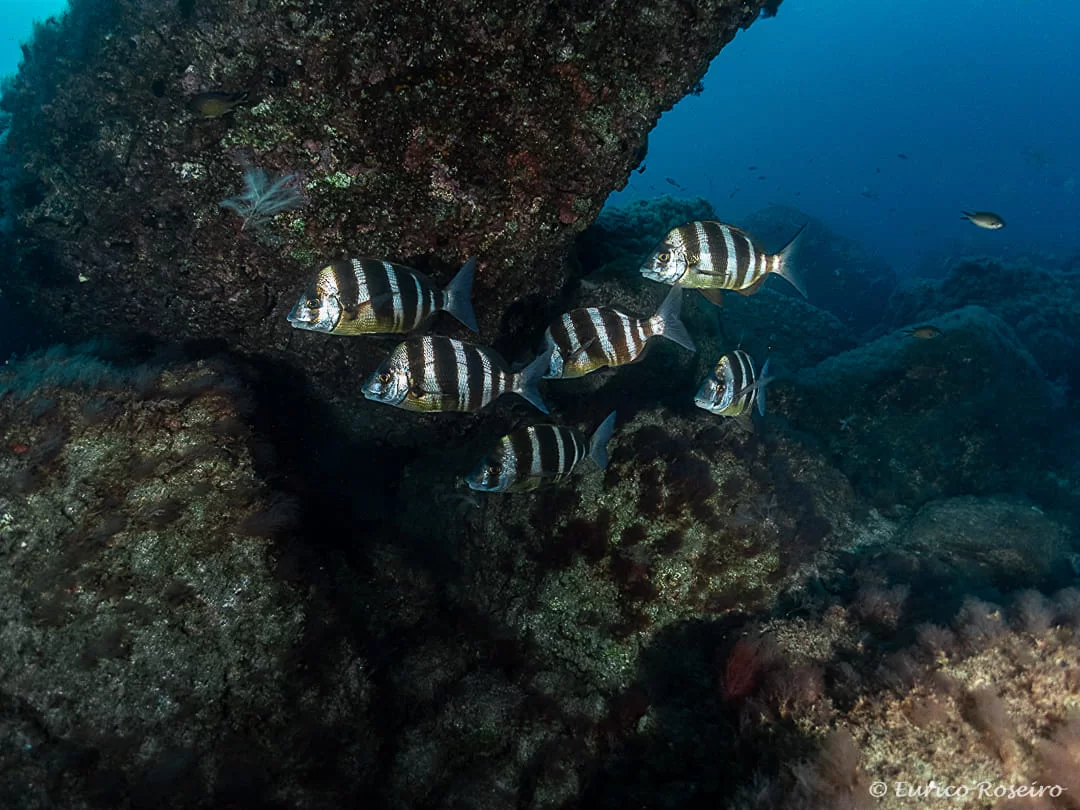
Bajo de las Palomas may be the smallest seamount in the Reserve, but once you descend, it feels like your own private discovery. The rock rises gently from the blue, shaped into arches and scattered formations that play with light and shadow. Sunbeams cut through openings, revealing schools of fish that shimmer and disappear just as quickly. It’s an easy, relaxed dive—perfect for slowing down and noticing the details often missed elsewhere. Life hides in every corner, tucked between rocks and glowing in backlit silhouettes. Stay aware as you surface, but below, everything feels calm… like a quiet secret the ocean only shares with those who take their time.

— Photos by Alain Monteiro and Eurico Roseiro

Bajo de Testa

What if history didn’t sink… but simply learned how to hide?

At Bajo de Testa, you descend into a lush posidonia forest so dense it feels alive, swaying gently as if guarding its secrets. Then, slowly, shapes emerge—massive anchors, softened by time, half-buried and almost invisible until you’re right beside them. Each one whispers of journeys long past. The seabed rises into two rocky headlands split by a quiet canyon, inviting you to explore tunnels and hidden passageways. Schools of salps drift by like silver clouds, while bream flash in the blue around you. It’s not the biggest dive in Cabo de Palos—but it’s one that stays with you, where nature and history blend so seamlessly, you’re never quite sure where one ends and the other begins.

— Photos by Miguel Miranda

Bajo de la Morra

A hidden giant rises from the blue—and you’re about to trace every curve of it.

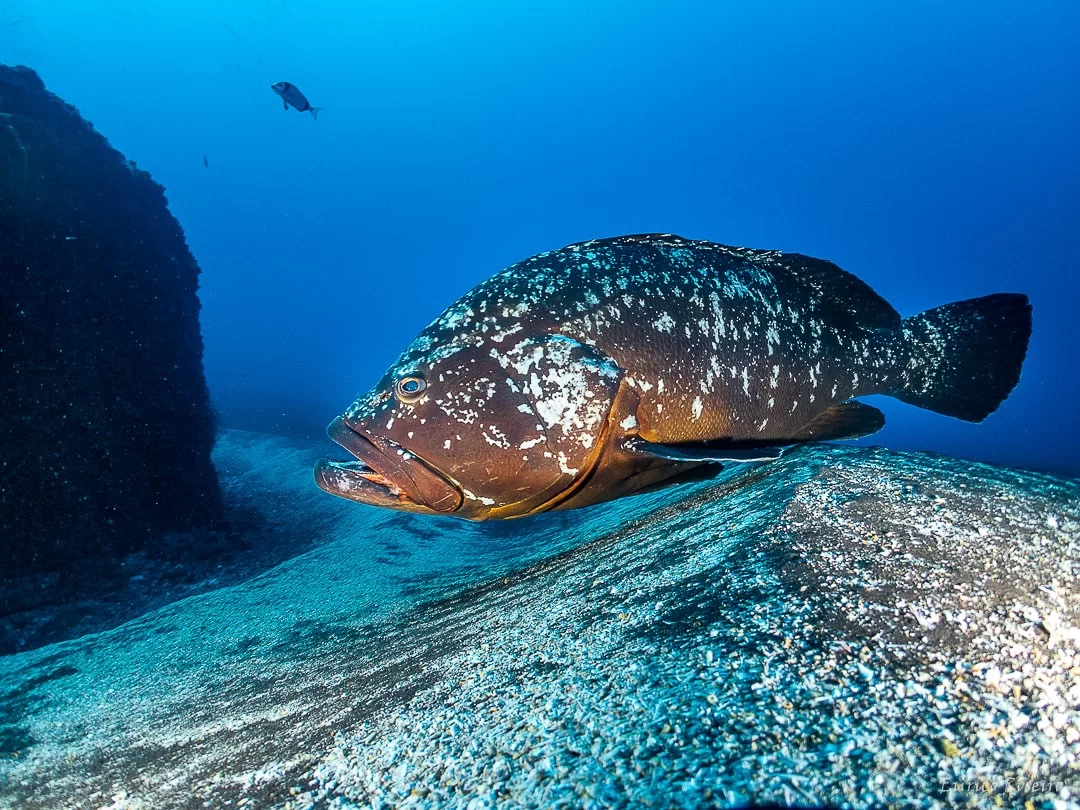
Descending onto Bajo de la Morra feels like landing on a submerged world. A vast dome of rock emerges beneath you, lifting from the depths with quiet presence. As you follow its slope, the terrain suddenly opens into a winding canyon, drawing you deeper between its walls. The light softens, and at the end, a sheltered cavity appears—home to still, watchful groupers that barely move as you pass. From here, the reef stretches outward, connecting to another formation in the distance, inviting you to keep exploring. Between rocky hollows and the open blue, every moment feels full of possibility… like the dive is unfolding just for you.

— Photos by Eurico Roseiro and Pedro Afonso

Bajo de Piles 2

It begins like any dive… until the water suddenly fills with movement.

At Bajo de Piles 2, you descend onto a long, hidden ridge rising from the deep, stretching beneath you like a sleeping giant. The currents are gentle, the path easy—but the ocean has other plans. Out of the blue, barracudas gather in shimmering lines, circling with quiet precision. Then, in autumn, everything accelerates. Massive schools of bogas pulse through the water, and in an instant, tuna explode into the scene—fast, powerful, unstoppable. The energy is electric, impossible to ignore. Between these moments, the reef feels calm, almost patient… as if waiting for the next spectacle. Here, you don’t just observe the ocean—you feel its raw, untamed rhythm.

— Photos by Alain Monteiro

Bajo de Piles 1

It rises from the depths like a meeting point of worlds—where everything seems to gather.

Descending onto Piles 1, the reef lifts toward you from the blue, guiding you from deeper waters up to a sunlit crest just beneath the surface. But it’s not alone. Around it, scattered formations emerge—the distant Piedra del Francés to the north, and to the east, the striking silhouette of the “Two Sisters,” standing like silent guardians. As you drift between them, life surrounds you in every direction: flashes of color, shifting schools, and the steady presence of groupers watching from the rock. The landscape feels open, connected, full of possibility. Here, the dive isn’t just one place—it’s a network of hidden corners, all waiting to be explored.

— Photos by Alain Monteiro and Ana Ferreira

Bajo de Dentro

From the deep blue, it rises fast—like a mountain breaking through the silence of the ocean.
 
At Bajo de Dentro, the descent is brief before the reef surges up to meet you, climbing from the depths to just a few metres below the surface. Along its northern face, a shadowed cave invites you in—swim through, and you emerge upward into light, a natural escape that feels almost surreal. Drift further, and two rocky promontories appear, split by a channel alive with motion. Barracudas gather in shimmering formations, while groupers, croakers, and morays hold their ground among the rocks. There’s energy here, a constant sense that something is about to happen. It’s a dive of contrasts—tight spaces and open blue, stillness and sudden life—all unfolding around you.

— Photos by Ana Ferreira, Eurico Roseiro and Pedro Afonso