
Archives: Spots

Baja del Secreto Sur

About 250 m south from “Baja del Secreto”, a mosaic of rocks and sandy bottoms create a place of curious rocky shapes, hiding astonishing animals around. The sandy bottoms provide habitat for garden eels, in contrast with schools of pelagic fishes swimming in the open ocean. A range of rays look after the spot, which offers shelter and food. A range of local fish species, from parrotfish to groupers, find shelter in between big rocks.

— Spot description by Holaislascanarias

— Photos by Holaislascanarias

Baja del Secreto Oeste

About 400 m northeast from “Baja del Secreto”, there is a diving spot with a picturesque seascape, encompassing an ample number of species representative of the marine biodiversity of the Canary Islands. Two large rocky ledges, starting at 15 m depth, drop off up to 50 m depth. All range of SCUBA diving levels may be practised here, taking advantage of the many faunal surprises this zone has.

— Spot description by Holaislascanarias

— Photos by Holaislascanarias
La Carrera

La Carrera: where black volcanic rock meets white sand and surprises hide beneath every ledge.

Imagine gliding over a bright sandy seabed, surrounded by dark lava formations and crystal-clear blue water. On the eastern side of Lobos Island, La Carrera feels like a natural underwater oasis, where every turn reveals a new detail.

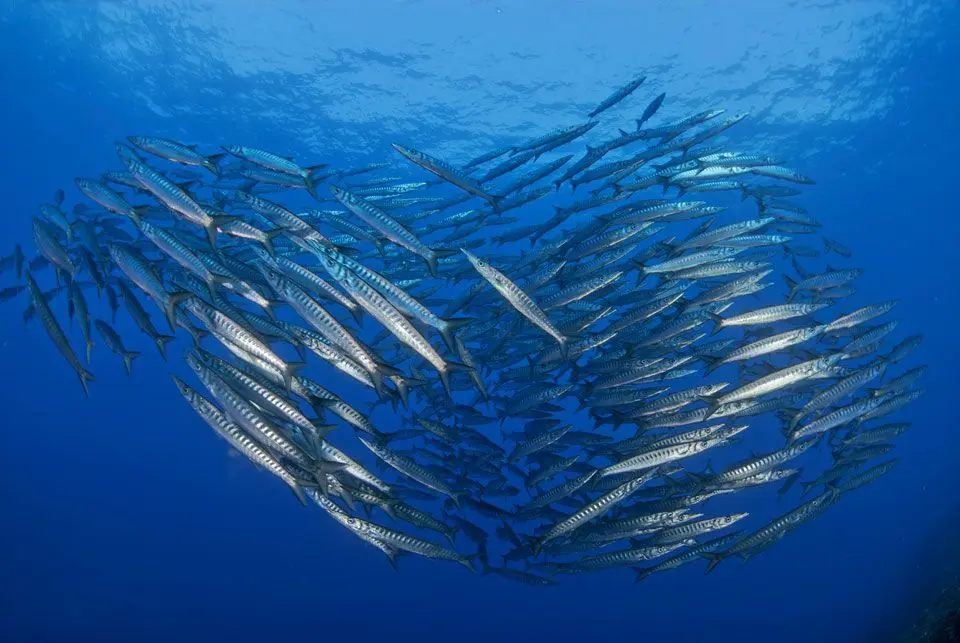
At depths of around 12–15 metres, explore rocky ledges and small caves alive with marine life. Look closely at the sand and you might spot a stingray resting quietly or an angel shark perfectly camouflaged against the seabed. Above you, schools of Canary damselfish shimmer through the water, while barracudas may cruise past in search of their next meal.

Peek beneath the overhangs, too—glass-eye fish, trumpetfish and porcupinefish often shelter in the shadows.

— Photos by Puntaamany

La Lagunita

“La Lagunita” is located east of Lobos, the boat ride takes around 20 minutes, it is worth it.
As soon as we enter in the water at a small steep wall we can find lots of life, as big schools of damselfish, bastard grunts as well seabreams.
We can also find some barracudas, com goupers and from time to time wahoos.

— Spot description by ACF

— Photos by Rolando Oliveira

El Jablito

El Jablito: a peaceful shore dive where the smallest details steal the show.

Sometimes, the best underwater adventures begin with nothing more than a step off the beach.

On Fuerteventura’s northeastern coast, El Jablito invites you into a calm, shallow world of sandy patches and rocky formations, with depths reaching just 15 metres. Protected by the shape of the coastline, it’s a relaxed spot for beginners and divers who want to slow down and enjoy the details.

Glide past schools of seabream, watch parrotfish pick their way around the rocks, and keep your eyes open for spider crabs hiding in crevices. With a little luck, you might even spot a camouflaged angel shark or a seahorse tucked among the underwater scenery.

Back on shore, the village’s traditional fishing atmosphere is the perfect way to end your dive.

— Photos by Holaislascanarias

La Caleta

A quiet underwater escape with a chance of meeting one of Fuerteventura’s most fascinating visitors.

Just a short boat ride from Caleta de Fuste, La Caleta welcomes you into a peaceful underwater world where rocky formations meet sandy seabed and gentle currents let you take your time exploring.

Descend to around 8 metres and drift past schools of bream and bogues, while juvenile barracudas flash through the blue. Look closely among the rocks and sand, and you might discover an octopus tucked into its hiding place or a seahorse blending perfectly into its surroundings. Remains of an old boat add a little mystery to the landscape, while winter brings the possibility of spotting angelsharks resting on the seabed.

With depths reaching just 15 metres, it’s a relaxed dive full of small surprises.

— Photos by Ana Ferreira and Holaislascanarias

El Cañon

Where a quiet sandy seabed might hide one of Fuerteventura’s most fascinating encounters.

Not every spectacular dive needs towering walls or dramatic drop-offs. Sometimes, the magic lies just centimetres above the seabed.

At El Cañón, small rocky formations create a maze of nooks and crevices, inviting you to slow down and discover the life tucked away inside. Moray eels peek out from their hiding places, while catalufas and other marine creatures shelter among the rocks. With an average depth of just 10 metres and a maximum of 14, this relaxed dive is suitable for divers of all levels.

But the real highlight? The sandy, rocky bottom is a favourite resting place for angelsharks. During the breeding season, you may even encounter juveniles.

— Photos by Holaislascanarias

Faro de Jandia – Veril Grande

A wall that plunges into the deep blue, caves waiting to be explored, and the possibility of a truly extraordinary encounter.

Just 200 metres offshore from the Jandía lighthouse, in southern Fuerteventura, this spectacular dive begins over white sand and crystal-clear water before revealing a dramatic underwater wall. At around 20 metres, the reef drops steeply towards 40 metres, creating a fascinating landscape for divers to explore.

Along the way, look out for seabream, black moray eels and angelsharks resting on the seabed. Near the wall, garden eels emerge from the sand, while the open blue occasionally brings surprises such as devil rays or even whale sharks.

With caves and different depths to discover, Veril Grande offers an adventure shaped by your experience and curiosity.

— Photos by Holaislascanarias

Veril Chico

The Veril Chico is located next to the Veril Grande, both very similar, and allows you to dive along a large rock wall. Being the smallest in length, this dive invites you to enjoy it calmly, with time to explore all the crevices and ledges. The marine fauna in this area is very accustomed to the presence of divers so it is possible that we can get close to the large groupers and abades. In addition, more timid species such as the scorpionfish, the rock cod and the toadfish also live among its crevices. The fauna is very distributed, and there is the possibility that we can find a school of fish. This makes it one of the dives with the greatest fauna on the island.

— Spot Description by Holaislascanarias

— Photos by Holaislascanarias

Punto Chupadero

Two dive sites in one, with a depth suitable for beginners, try dives, snorkeling and free diving. Chupadero or El Puertito de la Lajita, thanks to its relief, houses an infinite amount of life in its rock walls or sandy bottoms.

Here we can see lots of small and medium sized fish, crustaceans, nudibranchs, rays, groupers, morays, octopuses and angel sharks.

— Spot description by SSI

–Photos by: Ana Ferreira and Pedro Afonso

El Castillo Negro

This dive is located in front of the Caleta de Fuste pier where we will find a reef that houses a varied number of species characteristic of the seabed of this area.

On this beach we will find specimens of large groupers and a large sample of species typical of this coast such as redhead, salemas, cuttlefish, etc.

— Spot description by Holaislascanarias

— Photos by Holaislascanarias

El Bajon del Rio

A drop of golden sand 18 meters deep from which volcanic rocks several meters high and parasol-shaped appear. These ‘mushrooms’ are a refuge of unique biodiversity. This point located to the north of the island of Fuerteventura, in the middle of the strait that separates it from the small islet of Lobos, is just five minutes by boat from the port of Corralejo.

This is a dive accessible to divers of all levels, but only with the right current and tide conditions. When descending, the enormous explosion of marine life around these enormous ‘mushrooms’ is surprising. There are a huge amount of sponges on their ceilings. Patrolling the place we see iridescent schools of up to six different species, such as rock cod and seabream. Groupers, abbots and horse mackerel swim in search of small prey, while the old ones browse non-stop. And in the sand you can see some elusive rays.

— Spot description by Holaislascanarias

— Photos by Holaislascanarias